

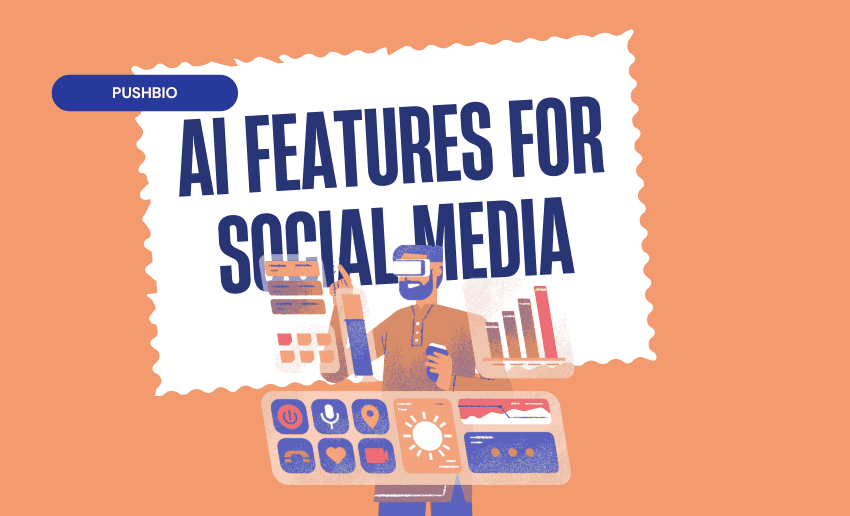
With the continuous advancement of Artificial Intelligence, its application in social media has continued to expand. The introduction of smart features that handle almost every task on social media means social media managers now work differently. Today, there are countless AI features for social media managers designed to automate scheduling, track audience behavior, and even generate creative captions or visuals.
These social media AI features help simplify daily routines, improve engagement rates, and save valuable time that can be used for strategy and creativity. With AI handling repetitive and time-consuming processes, managers now focus more on planning. However, knowing which AI features to use and how to combine them effectively is the first crucial step in achieving success.

This article will explore the top 20 AI features for social media managers that make content planning, posting, and performance tracking easier and more efficient.
AI has become a reliable partner in managing social media tasks, handling many repetitive and data-driven activities with ease. From automating post scheduling and generating captions to analyzing audience insights, AI for social media management has proven to be a powerful time-saver. These systems can quickly identify trends, suggest the best times to post, and even predict which content will perform well based on past engagement.
However, there are still areas where human creativity and strategy remain essential. AI can create content, but it doesn’t fully understand emotional tone, brand personality, or cultural context the way humans do. This means what you get from AI in some tasks will lack human empathy and connection. Social media success still depends on storytelling, authenticity, and community interaction which are things that require a personal touch.
AI is no longer just a helper, it’s the secret weapon behind the most effective social media strategies. Today’s top social media managers use advanced AI features to predict trends, personalize content, and automate time-consuming tasks without losing authenticity.
Here are some innovative AI features that are reshaping how brands connect with audiences in real time:
1. AI-powered content creation
Content demand is high across platforms and AI creation reduces time spent staring at a blank screen and increases throughput without sacrificing consistency. For creators and brands, this means more experimentation and faster publishing cycles.
AI-powered content creation uses language models and templates to draft post captions, ad copy, microblogs, and longer content quickly. These systems generate ready-to-use drafts and offer style/brand tuning so managers can produce more ideas and faster first drafts. AI content tools can save hours per week by turning a short brief into multiple caption variants or long-form posts.
Key benefits
- Rapid idea generation and multiple caption options.
- Consistent brand voice with templates and tone controls.
- Faster A/B testing of copy variations.
Top tools: ChatGPT, Jasper, Claude.
2. Social listening and Sentiment analysis
Knowing how people feel about your brand and how that changes lets teams act before small problems become crises and double down on what’s working. For creators, listening shapes content that resonates.
Social listening systems gather mentions, conversations, and hashtags across platforms and use AI to classify sentiment (positive/negative/neutral), spot recurring themes, and flag emerging issues. This feature turns noisy social streams into prioritized insights so managers can respond quickly, identify PR risks, and measure brand health.
Key benefits:
- Real-time brand mention monitoring and alerts.
- Automated sentiment scoring for trend tracking.
- Theme and influencer identification.
Top tools: Brandwatch, Talkwalker, Sprout Social.
3. Smart scheduling and Auto-posting
Consistency and timing are crucial on social platforms. Smart scheduling helps social media managers maintain regular presence while maximizing visibility without watching the clock.
Smart scheduling combines historical performance data and AI predictions to pick the best time slots and sequence for posting. Auto-posting features publish across multiple networks and adapt cadence automatically. This reduces manual scheduling and improves reach by posting when audiences are most receptive.
Key benefits:
- Higher engagement by posting at optimal times.
- Automated cross-platform publishing and queues.
- Reduced manual calendar maintenance.
Top tools: Buffer, Later, Hootsuite.
4. AI Hashtag suggestions
Hashtags remain a discovery tool on many platforms. Smart suggestions help creators and managers maximize visibility with less guesswork. Hashtag suggestion engines analyze content, recent engagement patterns, and hashtag performance data to recommend tags that expand reach and match content intent. AI helps pick a mix of niche and high-reach tags and can score hashtag sets by likely discoverability.
Key benefits:
- Data-driven tag selection for reach and relevance.
- Faster caption composition with suggested tag groups.
- Avoids overused or banned hashtags.
Top tools: RiteTag, Flick, Hashtagify.
5. Visual recognition and Image analysis
Visuals drive engagement; knowing which images succeed saves time and improves creative decisions. For creators, automated tagging and content suggestions speed up publishing. Visual recognition tools use computer vision to tag image content, detect objects/brands/faces, and surface which kinds of images perform best. They can auto-label assets for easy searching, check for brand compliance, and recommend visual edits or replacement assets. Enterprises use these features to manage large asset libraries and plan visuals that attract engagement.
Key benefits:
- Automatic image tagging and asset organization.
- Detects logos, objects, and scenes for brand safety.
- Suggests visuals or identifies high-performing image types.
Top tools: Google Cloud Vision, Clarifai, Adobe Sensei.
6. AI-powered Chatbots and DMs automation
Fast responses matter on social media and AI chatbots reduce workload while keeping the audience engaged and supported. AI chatbots handle routine customer messages, FAQs, and common DM flows using NLP and preset flows. They free teams from answering repetitive queries and can collect leads, book calls, or triage tickets before handing off to humans. Modern chatbots embed on Instagram, Facebook, WhatsApp, and websites.
Key benefits:
- 24/7 automated responses and lead capture.
- Faster response times and higher customer satisfaction.
- Seamless handover to human agents for complex issues.
Top tools: ManyChat, Chatfuel, MobileMonkey.
7. Performance prediction models
Predictive signals let social managers be strategic about what to publish and when to invest promotion dollars. This raises the odds of measurable results. Performance prediction models analyze historical post metrics like engagement, reach, format, time and use machine learning to predict which upcoming posts or content ideas will likely perform best. These predictions help prioritize creative energy and ad spend toward content that data suggests will win.
Key benefits:
- Forecasts content ROI and engagement potential.
- Helps prioritize which posts to A/B test or boost.
- Reduces risky, low-performing experiments.
Top tools: Vista Social, Hootsuite Insights.
8. Automated video editing
Short-form video is central to discovery. Automated editing speeds production so creators can publish more content and test formats without large editing teams. Automated video editors use AI to transcribe, find highlights, remove filler, add captions, and resize footage for different platforms. They significantly cut editing time for Reels, TikToks, and Shorts by turning long recordings into platform-ready clips. New native apps also pack AI features for quick production.
Key benefits:
- Convert long videos into multiple short clips quickly.
- Auto-captioning and filler removal for polished content.
- Template and resizing presets for platform formats.
9. AI analytics dashboards
Teams need fast insight, not raw numbers. Dashboards that convert data into prioritized actions enable better decisions and clearer stakeholder reporting. AI-enhanced analytics dashboards aggregate platform metrics, apply anomaly detection, and generate human-readable summaries and recommendations. They save time on reporting and highlight the most important trends, channel by channel. Many platforms now include smart summaries and suggested next steps.
Key benefits:
- Unified reports across networks with AI summaries.
- Automated anomaly or trend alerts.
- Actionable recommendations for content and timing.
Top tools: Sprout Social, Brandwatch.
10. Content repurposing tools
Repurposing maximizes reach and reduces content creation pressure. For creators, it’s the most efficient path from one recording session to a month’s worth of posts. Content repurposing tools use AI to extract highlights, transcribe long content, and automatically create derivative assets (short videos, quote images, audiograms). This amplifies the life of a single piece of content and helps small teams get more mileage from interviews, podcasts, and webinars.
Key benefits:
- Turn one long asset into many smaller posts.
- Faster cross-platform publishing with automated resizing.
- Keeps messaging consistent across formats.
Top tools: Repurpose.io, Headliner, Pictory.
11. AI competitor analysis
Competitive intel keeps your strategy grounded in market reality. For creators and brands, it reveals opportunities to differentiate or replicate formats that work. AI competitor tools automatically track competitor posting cadence, content types, engagement, and promotional activity. They summarize differences, benchmark share of voice, and recommend strategic shifts to close performance gaps. This helps teams see what’s working in their niche without manual research.
Key benefits:
- Automated benchmarking and trend spotting.
- Alerts when competitors launch campaigns or go viral.
- Data to inform positioning and content gaps.
Top tools: BuzzSumo, Rival IQ, SEMrush Social Toolkit.
12. AI trend forecasting
Being early on a trend can dramatically boost reach. AI forecasting helps creators and brands take advantage of momentum rather than react after it’s passed. Trend forecasting tools scan vast datasets to detect rising topics, keywords, and formats before they peak. These AI systems surface early signals so social managers can jump on trends early or create content that aligns with nascent interests.
Key benefits:
- Early identification of rising topics and cultural moments.
- Helps schedule timely, trend-aligned content.
- Reduces guesswork in content ideation.
Top tools: Exploding Topics, Trend Hunter, Google Trends.
13. AI caption generators
Captions influence engagement and clarity. For creators juggling many posts, instant caption options allow faster iteration and A/B testing of voice. Caption generators specialize in short, platform-appropriate text: hooks, CTAs, and personality-aligned captions. They give multiple tones (funny, formal, short, long) and often include hashtag suggestions and emoji placement. This feature speeds up post writing while maintaining variety.
Key benefits:
- Quick generation of multiple caption tones.
- Built-in CTA and hashtag suggestions.
- Saves time while keeping captions fresh and testable.
Top tools: Hootsuite AI copy features, Jasper, Writesonic.
14. Voice and speech AI tools
Audio is a growing content channel (podcasts, short audio clips). Voice AI reduces barriers to entry and speeds up editing and multilingual content creation. Voice and speech AI convert text into natural voiceovers, transcribe audio, and enable dubbing or voice cloning. They’re used to create podcasts, voiced reels, or accessible captions. These tools let creators produce audio content rapidly without recording studios.
Key benefits:
- Fast text-to-speech for narration and accessible content.
- High-quality voiceover without hiring talent.
- Easy transcription for captions and repurposing.
Top tools: Murf.ai, Descript, ElevenLabs.
15. AI collaboration and workflow tools
Larger teams and agencies need smooth handoffs. AI collaboration features reduce review cycles and keep content production predictable and on-brand. AI collaboration tools add intelligent suggestions inside planners, automate task assignment, and convert briefs into content checklists and drafts. They help teams coordinate assets, approve content, and maintain brand rules. Built-in AI assists with brief expansion, content briefs, and suggested publishing plans.
Key benefits:
- Faster briefing and clearer task handoffs.
- Automated content QA and brand compliance checks.
- Centralized asset and draft management with AI suggestions.
Top tools: Hootsuite social AI assistant, Asana with AI extensions.
16. AI Influencer matching
In social media strategy, partnerships with influencers can drive reach and authenticity but poor matches cost time and money. AI matching brings precision to the process and helps both brands and creators scale influencer marketing more intelligently.
AI influencer-matching tools use advanced algorithms to scan vast creator databases and match brands or creators with influencers whose audience, content style, engagement rates and demographics fit the brand’s goals. Instead of manually browsing profiles, these tools use AI to filter by audience overlap, niche relevance and past performance.
Key benefits:
- Quickly identify influencers whose audience aligns with your brand.
- Save time by automating the discovery and vetting process.
- Potentially reduce budget waste by working with more relevant creators.
17. AI Ad Optimization
Paid social media campaigns are complex and time-intensive. AI ad optimization reduces manual repetition, improves ROI, and allows social media managers and creators to focus on creative strategy rather than bid tracking and manual tweaks. AI ad-optimization features automate the testing and management of paid social campaigns. These systems adjust bids, allocate budgets, test creatives, apply targeting rules and report on performance in real-time.
Key benefits:
- Automatically adjust ad spend toward best-performing audiences and creatives.
- Run multivariate tests at scale instead of manually swapping campaigns.
- Gain cross-channel visibility and optimization (Facebook, LinkedIn, Google).
Top tools: Adzooma, Metadata.io
18. AI comment moderation
High-volume channels or large campaigns generate many comments; manual moderation is slow, error-prone and costly. AI moderation ensures consistent brand safety, faster responses and better community experience.
AI comment moderation tools monitor social media posts, paid ads, and community comments and use natural-language processing (NLP) and machine learning to detect spam, toxicity, disinformation or off-brand comments.
Key benefits:
- Protect brand reputation with 24/7 automated moderation.
- Reduce manual work of scanning comments across platforms.
- Maintain a healthier community and safe ad environments.
Top tools: BrandBastion, Modulate
19. AI content calendars
Consistent, well-planned content is vital for social media. An AI calendar ensures the strategic rhythm of posts, helps teams coordinate, and prevents overlooked deadlines or duplicated efforts. AI content calendars go beyond simple scheduling by working with content-planning AI assistants, ideation engines, scheduling algorithms and publishing workflows.
Key benefits:
- Automate ideation and scheduling of posts for multiple platforms.
- Visualize and manage campaigns, tasks and deadlines in one place.
- Improve consistency and reduce last-minute chaos in posting.
Top tools: CoSchedule AI Content Calendar, Adobe Express
20. AI personalization engines
Generic posts will increasingly under-perform. For creators and brands alike, being able to serve tailored content to different audience segments or platforms gives a competitive edge. AI personalization makes that feasible at scale, without manually mapping every variation.
AI personalization engines tailor content, recommendations, visuals, voice-overs or offers to individual audience segments or even real-time user behavior. For instance, Dynamic Yield uses predictive targeting and machine-learning to serve the right content to the right user across channels.
Key benefits:
- Deliver highly relevant content or posts based on user behavior or profile.
- Boost conversions, engagement, and loyalty through personalization.
- Scale personalized experiences without manual segmentation.
Top tools: Dynamic Yield, Adobe Target
FAQs
Can AI fully automate social media management?
AI can automate most parts of social media management like scheduling posts, generating captions, analyzing performance, and replying to comments. However, it cannot replace human creativity or emotional understanding. The best results come when you combine AI tools with your personal touch, ensuring your brand stays authentic and relatable.
Are AI social media tools worth the investment?
Yes, AI social media tools are worth it, especially for creators, marketers, and small teams. They save time, reduce errors, and help improve engagement through smart insights and automation. From AI content planners to caption generators, these tools make it easier to stay consistent and grow your online presence without working around the clock.
Can small businesses use AI for social media?
Many AI tools for social media are affordable and even offer free plans. Small businesses can use them to create posts, schedule content, find trending hashtags, and track performance. Using AI helps small brands compete with larger companies by improving efficiency, content quality, and visibility.
Finally
The top AI features for social media managers prove that technology is transforming how brands and creators work online. From AI-powered scheduling to smart analytics and caption generation, these AI tools help simplify daily tasks, boost engagement, and make smarter marketing decisions.
While human creativity still drives authentic storytelling, AI in social media management ensures that no time or effort goes to waste. Social media managers who learn to use these AI features can stay ahead of trends, connect better with audiences, and achieve consistent growth across all platforms.